

Hand & Wrist Pain Treatment in Stuart & Port St. Lucie, FL
Your hands do everything. When they hurt, everything is harder. Let’s find out why.
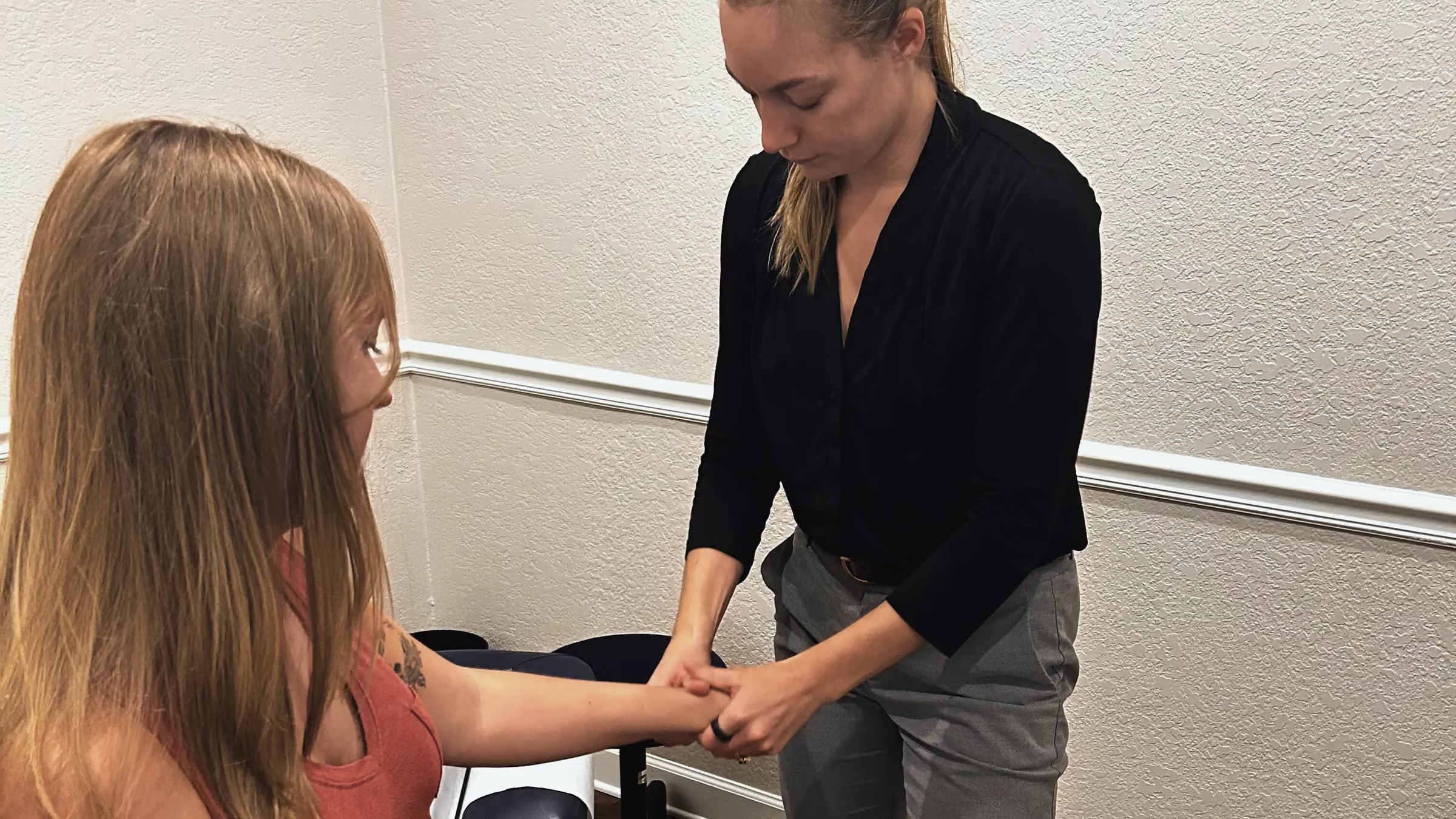
Hand and wrist pain is rarely just the hand. It can start in an overloaded tendon, an irritated joint, or a nerve compressed anywhere between your neck and your fingertips. We examine the whole chain, then treat the structure actually generating your symptoms. In most cases patients feel a difference on the very first visit.
You just want your grip back
It is not the pain scale. It is the jar you handed to someone else.
The jar you could not open. The pickleball paddle you switched hands for. Waking at 3am to shake the numbness out of your fingers. The knitting, the woodworking, the golf grip that no longer feels like yours. Hand and wrist pain does not stop you dramatically. It just quietly reassigns your life to your other hand.
A brace and a bottle of anti-inflammatories can quiet a flare. Neither addresses the tendon, joint, or nerve that is actually generating it, which is why the symptoms return the moment you go back to using your hands normally.
First, the reassuring part
Most hand and wrist pain responds well to the right plan.
Most hand and wrist pain is mechanical or soft-tissue: a tendon carrying more load than it can handle, a small joint that has become irritated, or a nerve getting compressed along its path. That category tends to respond well to focused, non-surgical care. It is also why we test your neck, shoulder, and elbow rather than assuming the problem lives where you feel it.
Some hand and wrist symptoms need medical attention first. We would rather you know the signs than wonder.
When to seek urgent care first
- Visible deformity after a fall, or an inability to move a finger
- Rapidly worsening weakness or visible muscle wasting in the hand
- Progressive weakness in a leg
- Redness, heat, and swelling with fever, which can signal infection
- A finger or hand that is cold, pale, or losing sensation
If any of these are happening, contact a medical provider or emergency care right away. When you're ready for hand and wrist pain that isn't an emergency, we're here.
WE GET WHAT YOU'RE GOING THROUGH
Which hand or wrist pain is yours?
"My wrist hurts" can trace back to several very different structures, and the right approach depends on which one. You do not need to diagnose yourself. Seeing which of these patterns sounds like you is a useful start, and your exam is what confirms it.
"It never came back right after the sprain."
Often: the original injury healed, but the wrist never regained its full range and the forearm never regained its strength, so you have been quietly compensating ever since.
What we'd likely reach for: chiropractic care plus a corrective-exercise plan to rebuild support.
"It hurts when I grip or lift."
Often: a tendon on the thumb side or the back of the wrist is overloaded from repetitive gripping, typing, or racquet work, and it complains under load rather than at rest.
What we'd likely reach for: decompression and SoftWave first, then rehab to make the fix hold.
"The base of my thumb aches constantly."
Often: the small joint at the base of the thumb is irritated and the surrounding soft tissue is inflamed. It tends to bite hardest on gripping, pinching, and turning a key.
What we'd likely reach for: precise chiropractic care to restore movement, with Class IV laser to calm the inflammation.
"My fingers go numb at night."
Often: a nerve is being compressed somewhere along its path. The wrist is the usual suspect, but the same symptoms can come from the neck or the elbow, which is why we test all three.
What we'd likely reach for: gentle spinal decompression to ease the pressure, with SoftWave to support tissue repair.

Not sure which one is you?
That's exactly what the first visit is for. No pressure, no commitment beyond finding out what's going on.
Regenerative care treatments
For years this level of care was out of reach for most people. Not anymore.
SoftWave Therapy
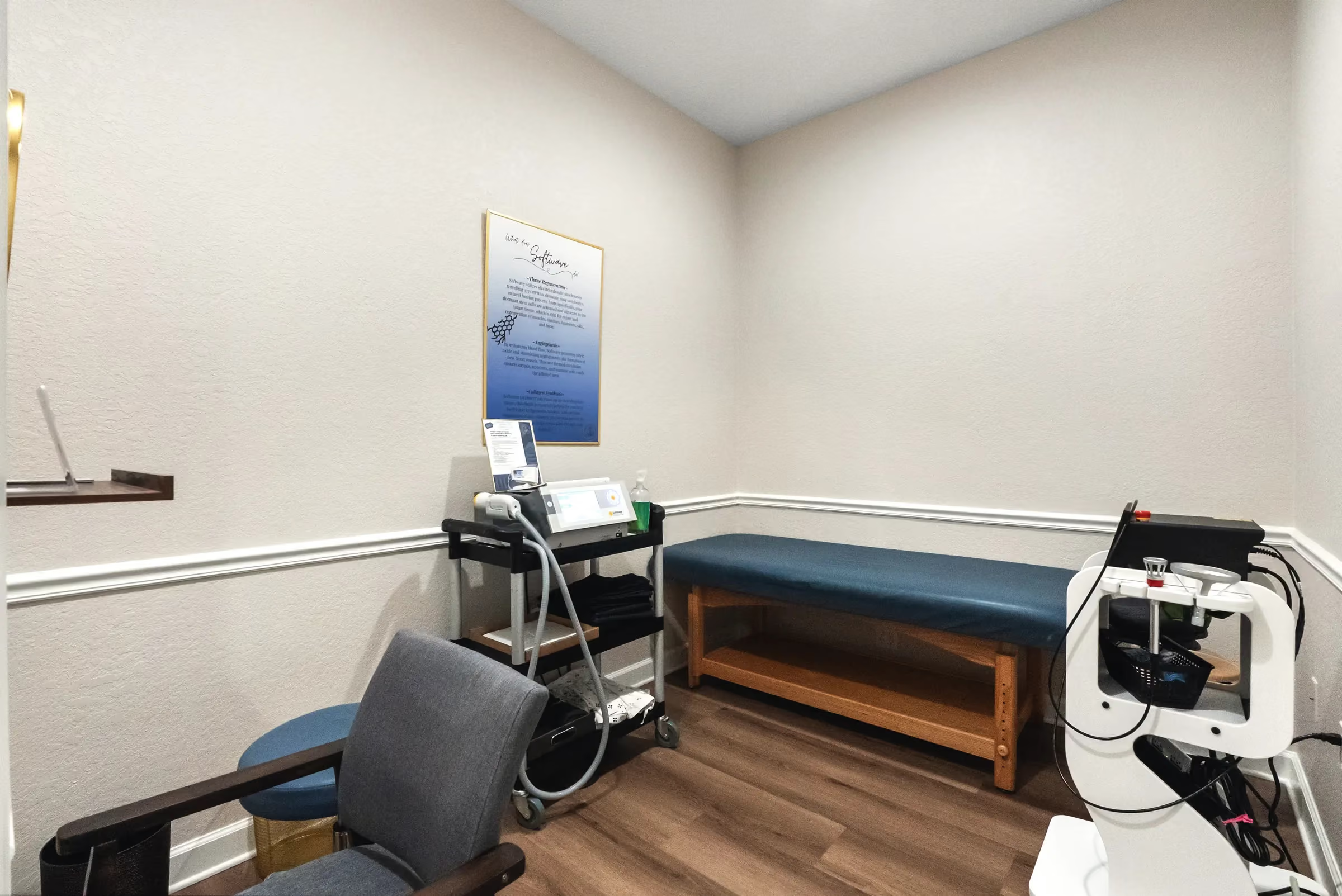
Regenerative sound-wave therapy that prompts your body’s own repair response in stalled tendon and soft tissue around the hand and wrist. Non-invasive, no injections, about five minutes.
Spinal Decompression
Gentle, non-surgical traction for the cases where your hand symptoms are actually coming from a compressed nerve root in your neck.
Chiropractic Care
Precise, goal-based adjustments to the wrist, elbow, and neck, restoring the motion that keeps the nerve and tendon from being pinched along the way.
Class IV Laser Therapy
Deep-tissue laser that helps calm inflammation in a small, irritated joint or tendon and improve blood flow, which supports recovery between visits.
Corrective Exercise & Rehab
A custom, diagnosis-specific home program with video that rebuilds grip and forearm strength and changes how you load your hands, so relief has a reason to last.
Why patients choose us for hands and wrists
One team, treating the whole hand.
Hand pain often gets treated as a wrist problem when the nerve is being compressed at the neck, or as a nerve problem when the real issue is an overloaded tendon. Here one team examines the whole chain, builds one plan, and adjusts it as you improve.
Care led by a SoftWave trainer
Dr. Kianoosh Ziayan, DC ("Dr. Z") is an internationally certified SoftWave trainer who teaches other doctors how to use it. The protocols he teaches are the ones our team delivers.
Built around a busy calendar
Visits run around ten minutes, most patients wait under five, and we hold same-week openings at both offices. Getting this sorted out should not cost you your week.
Honest about your plan
You get transparent pricing on day one and an honest read on what to expect. It is healthcare, so nothing is promised. We tell you what we see and adjust the plan as you improve.
Most hands are a mix of these rather than one clean category, and more than one structure can be involved at once. That is the point of the exam: we sort out which ones are driving your symptoms and build the plan around the real cause.
What to expect
9 in 10 patients notice an improvement at the first visit.
You are never guessing what comes next. Here is how your hand and wrist plan takes shape.
We learn your goal
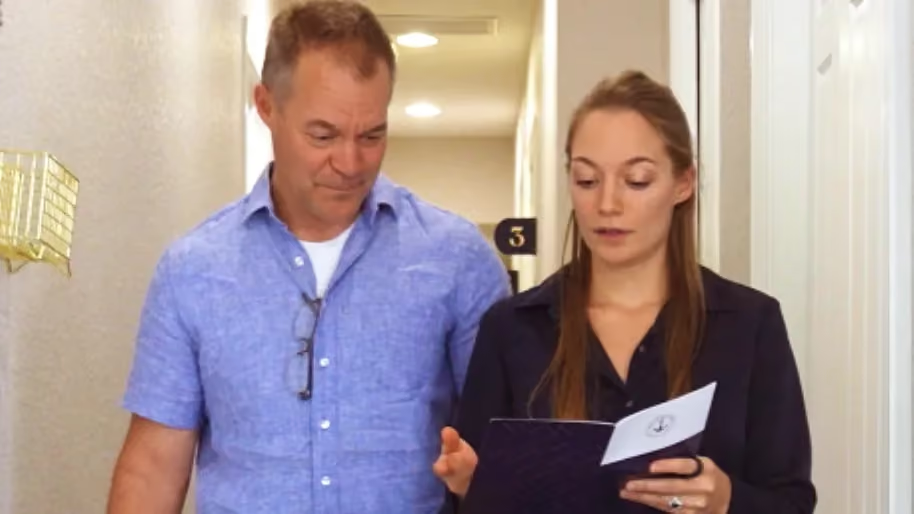
A case manager sits with you to understand what your hands have stopped doing, whether that is a golf grip, a hobby, a keyboard, or a full night of sleep.
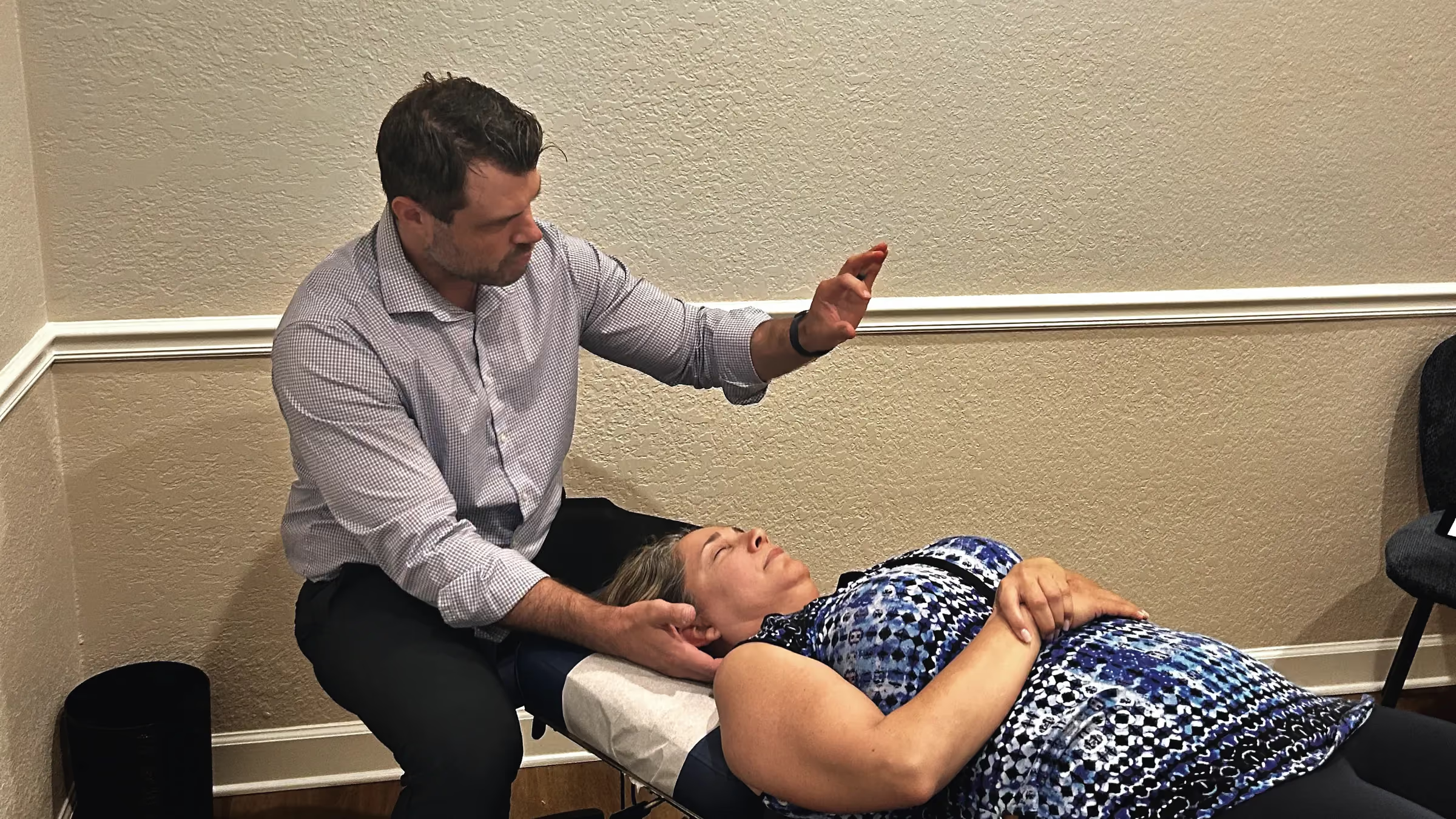
The doctor examines you
A thorough orthopedic and neurological exam tests the wrist, elbow, and neck, so we treat the structure actually generating your symptoms rather than the place you feel them.
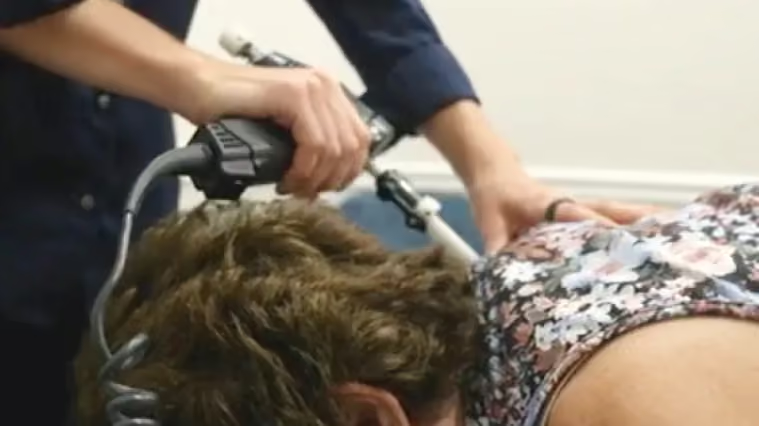
You start the same day
Where it's appropriate, treatment begins on visit one, so you leave having already taken the first step, not just a referral.
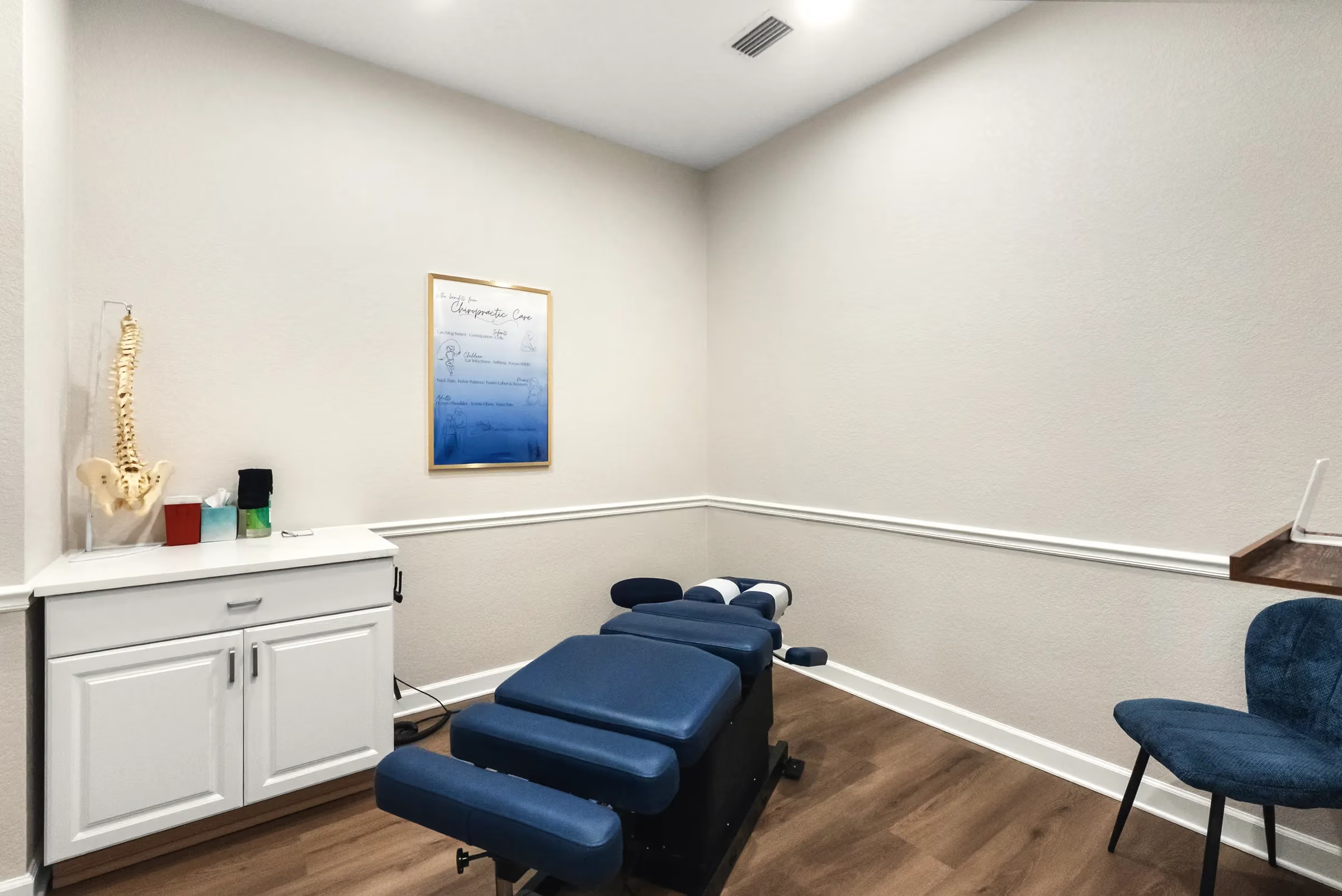
We build the plan, then keep tuning it
You get a clear plan and a home program about two weeks in, plus regular check-ins so grip strength and range are tracked as they improve.
9 in 10
PATIENTS NOTICE A DIFFERENCE ON VISIT ONE
Day 1
RELIEF IS COMMON
$97
FIRST VISIT
Zero
SURGERY OR INCISION
Your First Visit
The visit that finally gives you a real answer.
An honest go or no-go before you commit to anything.
Custom home-exercise program with video, sent about two weeks into care
A personalized, goal-based care plan
Same-day treatment where appropriate (SoftWave, Class IV Laser, or a chiropractic adjustment)
Full orthopedic exam with the doctor, including range of motion, muscle and orthopedic testing
In-depth consultation with your case manager
Common questions
Have questions? We have answers.
Maybe, and maybe not. Night numbness in the fingers is the classic pattern, but the same symptoms can come from a compressed nerve root in the neck or a tight structure at the elbow. Your exam tests all three so you are not treating the wrong location.
Not necessarily. A thorough orthopedic and neurological exam tells us a great deal on its own. If imaging or nerve testing would change your plan, we will say so and help you get it. We do not order studies just to order them.
Most hand and wrist pain improves with conservative, non-surgical care, and that is our focus. If your exam suggests a case that genuinely calls for a surgical opinion, we will tell you and help you find the right person. Our job is to give non-surgical care a real, well-run chance first.
We accept Medicare and PIP, and some care may be billable through insurance. Where it isn't, we keep pricing transparent and offer the $97 first visit, plus financing including 0% options for qualified patients. You'll always know the cost before you commit.
Gentle by design on small joints. As one patient put it, treatments are quick and almost painless. SoftWave feels like light tapping, laser feels like warmth, and hands-on work on the wrist is precise rather than forceful. If anything is uncomfortable, your provider adjusts on the spot.
Ready when you are
Meet your doctor in person.
Start with the $97 first visit (a $250 value: consultation, full orthopedic exam, and same-day treatment where appropriate, plus your care plan and home-exercise program), or book a free five-minute call with a doctor if you would rather ask a few questions first. Two offices, one team, same standard of care.